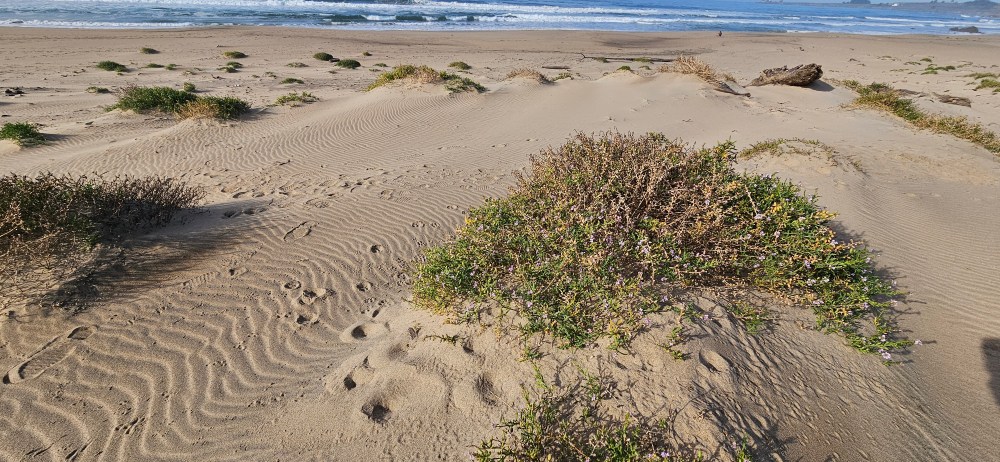
European searocket (Cakile maritima) among the dunes of Gozos Creek State Beach. 
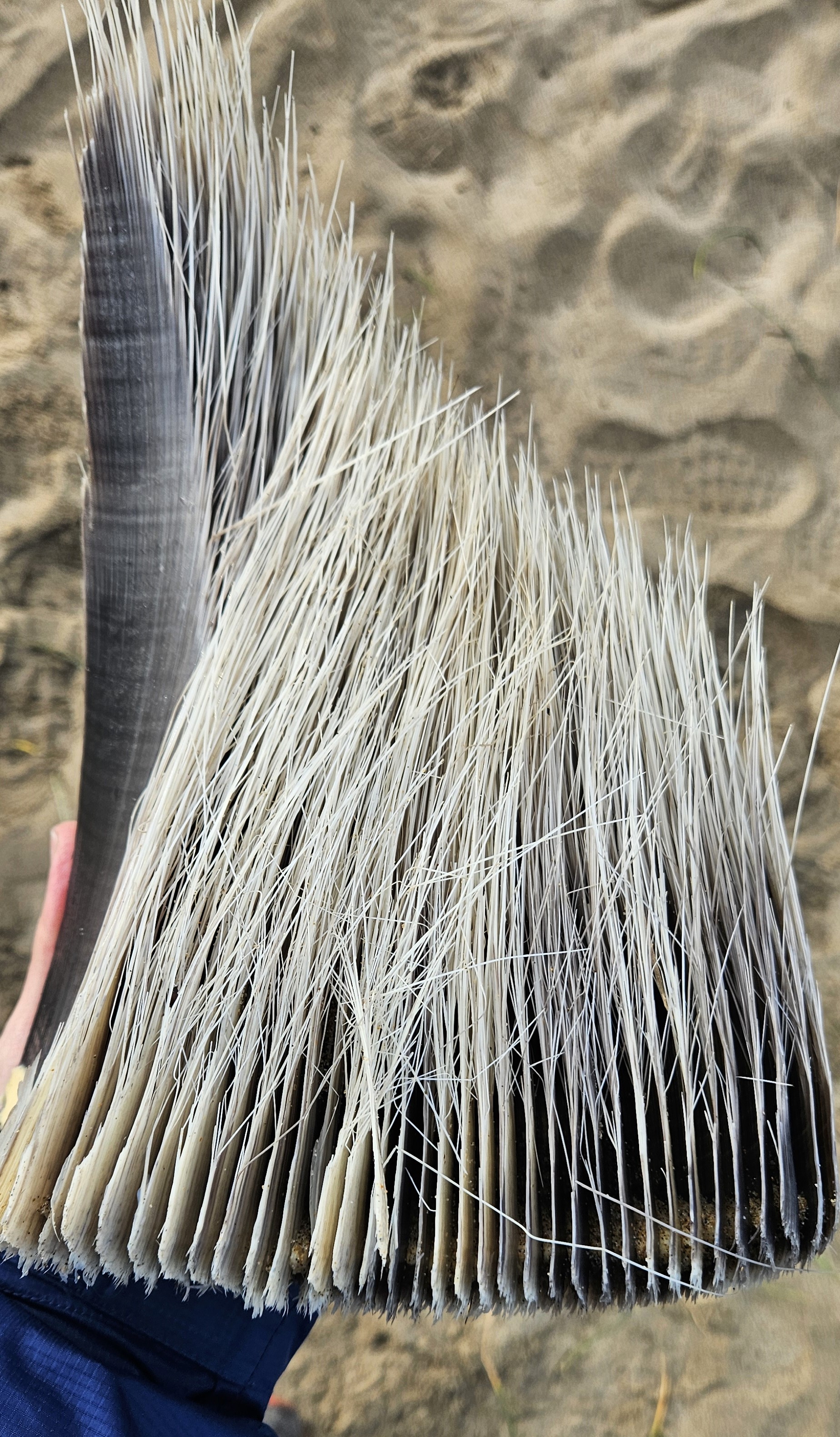
A piece of baleen from a gray whale 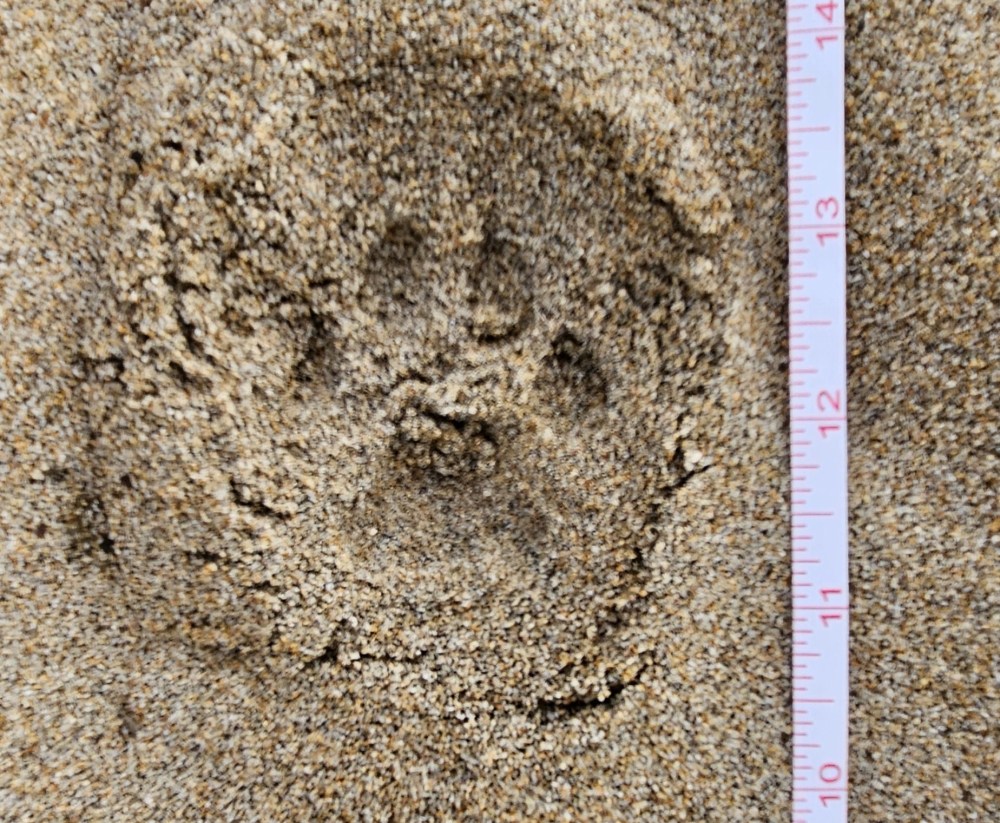
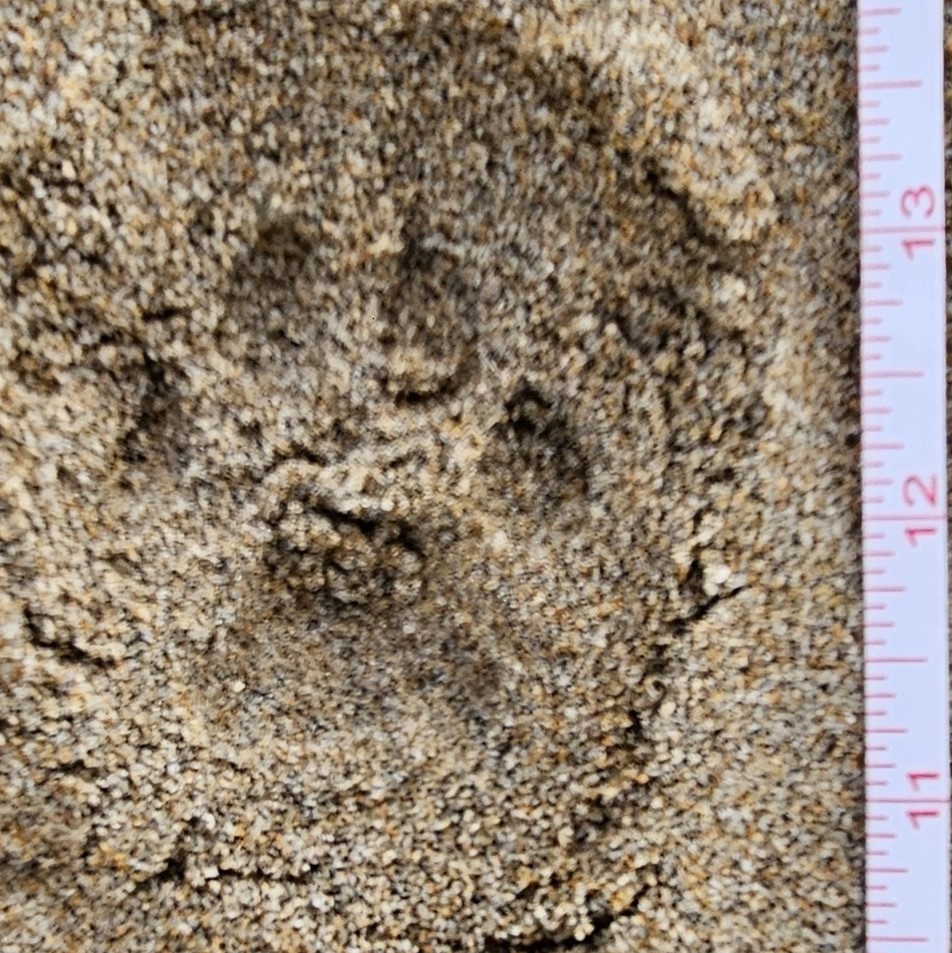
A right hind foot of a bobcat. Compare the shape and size of the palm pad to that of a gray fox below. 
A partially obscured front foot track of a gray fox (on the left) and a hind. Notice the small palm pads. 
A beach hopper of genus Megalorchestia 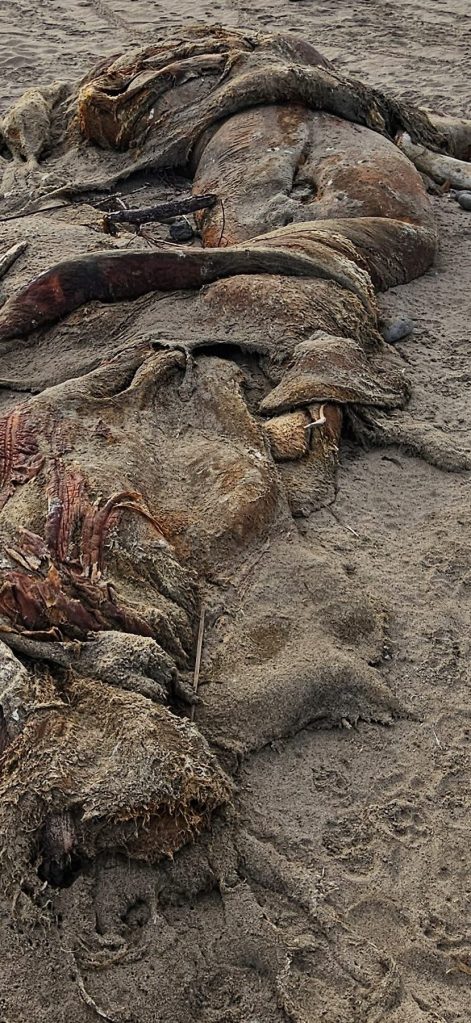
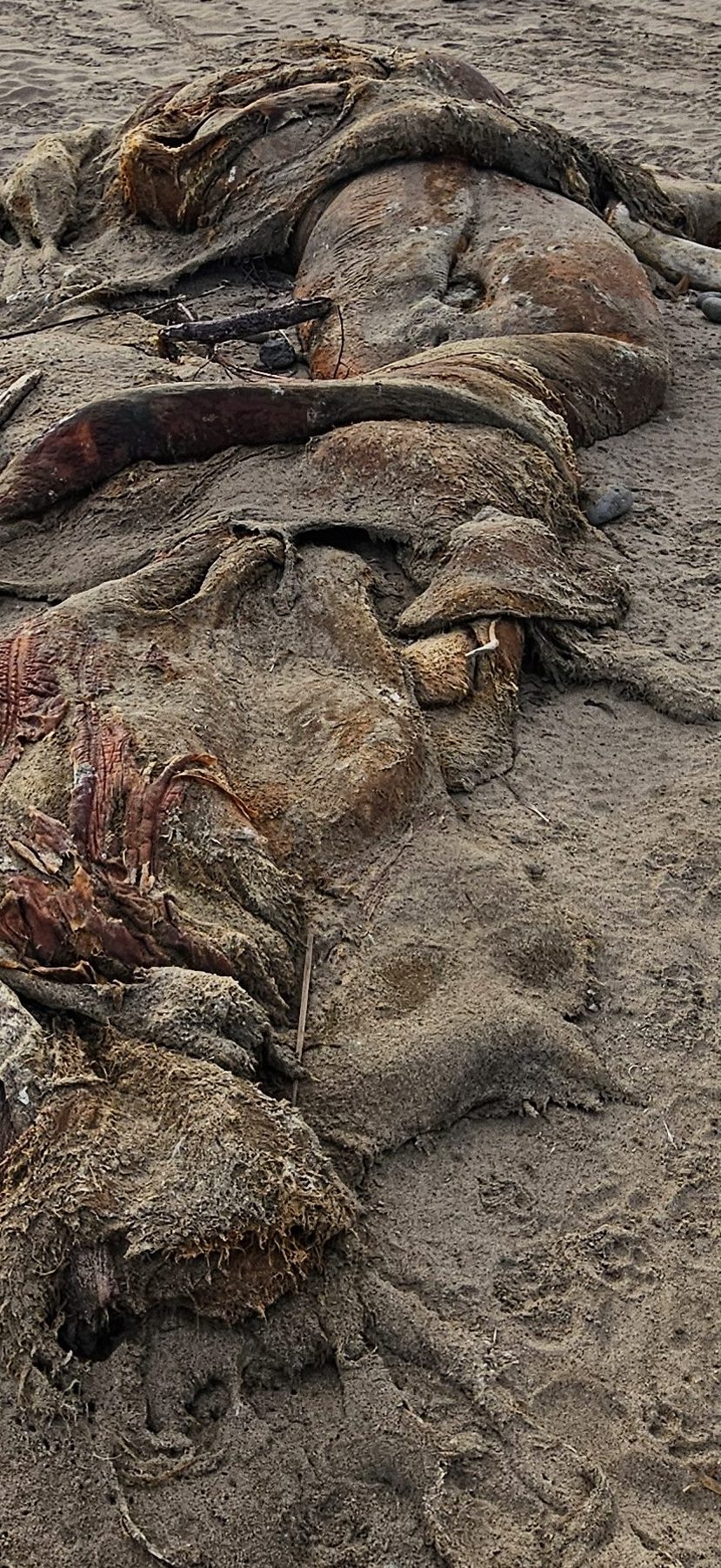
Remains of a gray whale. Notice the canine tracks in the lower right corner. 
Tracks of front (left) and hind feet of a coyote 
A series of bobcat tracks with hind feet landing ahead of the front. 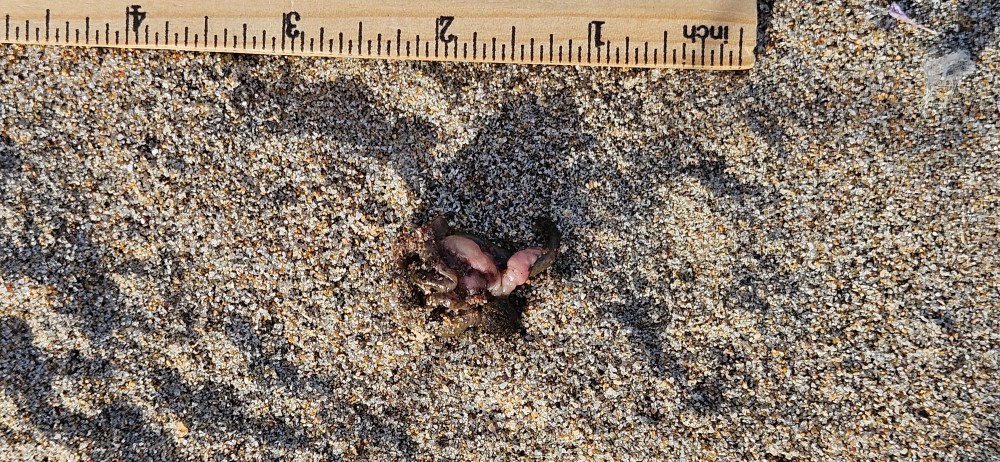
A bobcat had removed this the entrails of a deer mouse before consuming it. 
The deep tracks of a bobcat and a large space between the next group of tracks indicate an energetic leap to catch its prey. 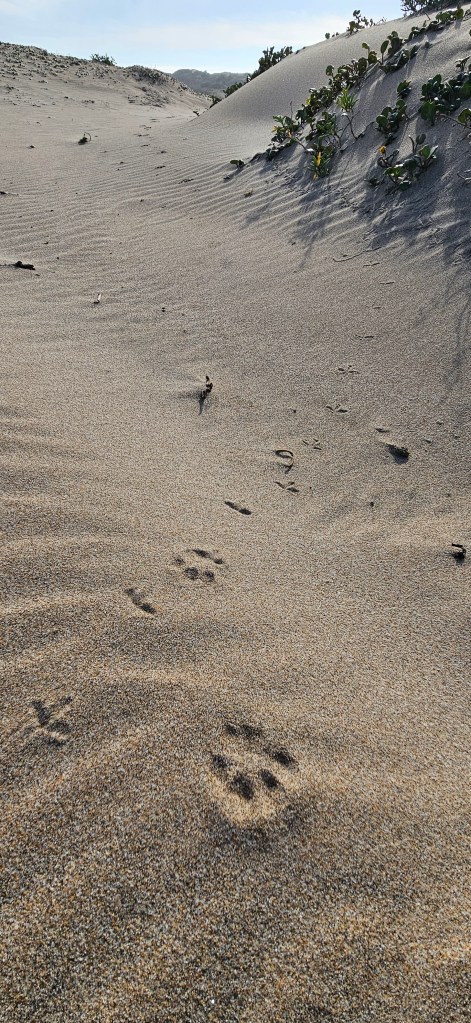
A look back at the bobcat trail from its point of view. Killdeer tracks cross the trail.
The morning air was crisp as several members of the Bay Area Tracking Club gathered in the parking lot of Gazos Creek State Beach, with the steady rhythm of crashing waves as our backdrop. The atmosphere was invigorating, filled with the promise of a new day and the thrill of discovery that lay ahead. Our scout, Lisa, had just returned from the early morning exploration and was bubbly with enthusiasm to share her discoveries with the rest of the group.
Garth, who was teaching tracking classes here the day prior, had stashed our first mystery by the beach entrance: a piece of a baleen plate. We examined its fibrous bristles, made of keratin—the same material as human hair and fingernails—and discussed its function. These long, flexible plates grow from the upper jaws of certain whale species and are lined with fine, hair-like fringes that filter small organisms like krill and plankton from seawater. As we ran our fingers along its intricate grooves, we wondered what species of a whale it belonged to. Regular visitors to the beach recalled that a humpback whale had washed ashore last summer whose likely remnants were still decomposing just beyond the lagoon. But before reaching that discovery, there were other puzzles to solve.
Along the edge of the beach, we found a trail of tracks leading along the dunes toward the beach entrance. Each print was round, with four toes and a wide trapezoidal palm pad marked by three distinct lobes at the rear – a bobcat’s signature was unmistakable. But as we delved deeper, we discovered another set of tracks, similar yet subtly different. The palm pads were smaller, and there were tiny claw marks – both clues that these tracks belonged to a gray fox, which must have passed by earlier. We had barely stepped onto the beach, and already discovered evidence of a marine giant and two mesopredators that had visited the beach before us.

Some of us got distracted with tiny indentations no bigger than a pinky nail scattered nearby. Curious, we scooped up a fistful of sand and uncovered a beach hopper, a type of isopod. We gently placed it back on the beach and watched as it burrowed into the sand, leaving behind its subtle marks that spoke of a hidden world, vibrant and alive, just beneath our feet.

Just on the other side of the lagoon we found the remains of a whale. There was little left to glean about its fate from the twisted and sun-bleached skin and blubber, yet the scene was alive with activity. Tracks, crisscrossing and weaving, told of scavengers drawn to the carcass. Among them, two sets of canine prints stood out, their paths direct and purposeful. Though some prints were splayed with larger claw marks, the directness of the trail and the stride length hinted at coyotes, their claws digging into the sand and palm pads barely registering as they trotted across the beach. We backtracked them while trying to estimate the time of their visit.

The dunes themselves held even more stories. Among them were round tracks with large palm pads pressed firmly into the sand—unmistakably those of a bobcat. Its smaller, symmetrical hind tracks appeared ahead of the larger ones, indicating an overstep walk. The bobcat had moved silently between clusters of European searocket (Cakile maritima) plants, where fresh tracks of deer mice harvesting seed pods were prevalent.
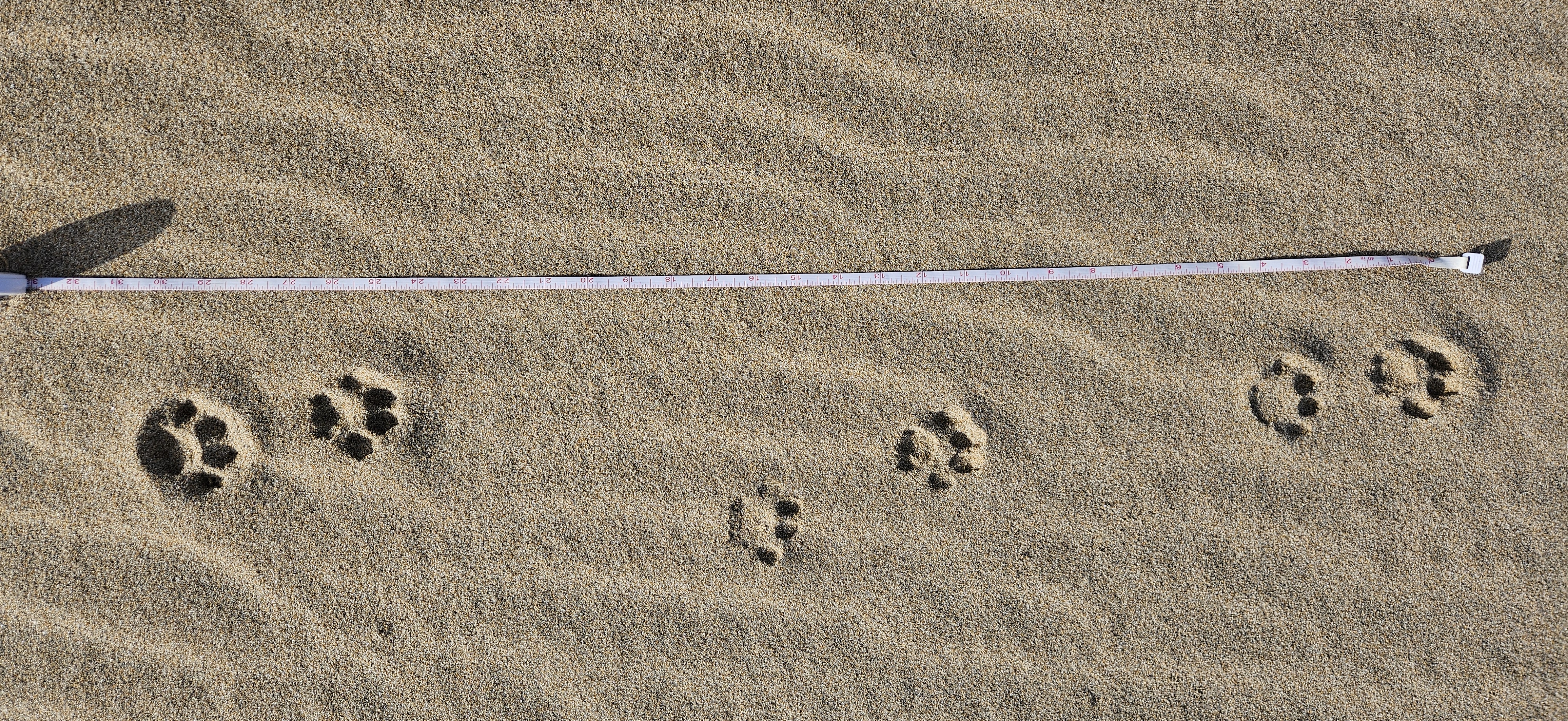
In a small depression between the dunes, we discovered a neat pile of entrails, no larger than a quarter. They appeared as if surgically removed, and we pieced together the sequence of events: the bobcat had shifted from an overstep walk to take a leap that left deep tracks, indicating a sudden burst of energy. The chase had likely ended at the top of the dune, where the bobcat caught its prey, then carried it to a more sheltered spot to feed.

As we backtracked the bobcat, we came upon a similar scene. Here, the pursuit began 15 to 20 feet before the catch, with clear evidence of a leap spanning several feet. We wondered how the bobcat had detected the tiny mouse from such a distance. Getting down to eye level of the bobcat, we realized the mouse would have been out of sight of the traveling bobcat. Had the bobcat caught its scent on the wind or perhaps heard the mouse scurrying over the sound of crashing waves? The predator’s heightened awareness of its environment left us in awe.
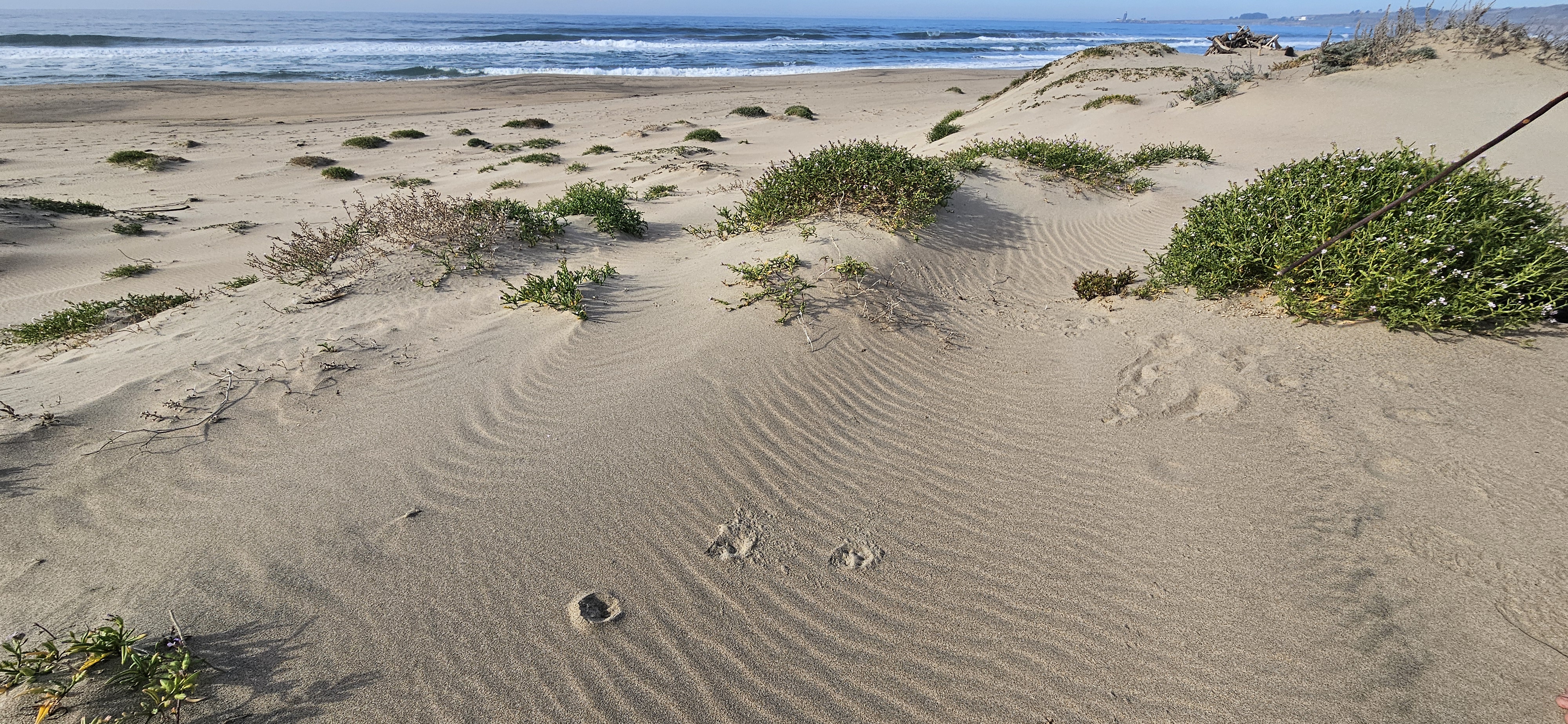
At the far end of the beach, where the winter rains had not yet recharged the seasonal creek, we found another bobcat trail that looped and crossed with the first. Was this a second individual, or was our intrepid hunter simply making the most of favorable conditions? As the clock neared 11, we gathered in a circle to share our observations and appreciations for the day’s discoveries.
Afterwards a smaller group of trackers continued into the dunes, hoping to figure out how many bobcats were active in the area, but trailing conditions became much more difficult between the grassed and thatch, so we decided to let our adventure end. The experience left us satisfied yet eager for more, knowing the beach and its dunes will hold countless more stories waiting to be uncovered.

The Bay Area Tracking Club meets every second Sunday of the month. To be notified of future events email main+subscribe@BATC.groups.io or join the facebook group.
An earlier version of this story suggested the baleen plate and whale remains belonged to a gray whale. While it is difficult to determine the species, there was a record of a humpback whale that had washed ashore last June, and random pieces of a whale carcass had been found along the shore since then.
Check out stories of my other adventures with wildlife below.


 Track And Seek
One thought on “Tracking Coastal Creatures at Gazos creek State Beach”